Sunday, 27 March 2016

Un but d'la Bibl'ye - Bible snippet

Aniet ch'est Pâques. Né v'chîn les vèrsets 44-49 du vîngt-quatrième chapitre d'la Bouonne Nouvelle s'lon Luc:

Today is Easter. Here's Luke, chapter 24, vv 44-49:

Épis i' lus dit, "Né v'chîn chein qué j'vos dis quand j'tais acouo entré vous: qué tout chein tch'avait 'té êcrit entouor mé dans la Louai d'Moïse, les Prophètes et les Sieaumes dait s'adonner." Épis i' lus avîsit pouor comprendre les Êcrituthes, en lus dithant, "Ch'est êcrit qué l'Onguenné dait souffri, et dait êt' souôl'vé des morts l'traîsième jour, et qu'l'èrpentance et l'pardon des péchés sont à êt' procliâmés dans san nom à toutes les nâtions, à c'menchi d'Jéthusalem. Ous êtes les têmouains d'ches choses-chîn. Et viy'-ous, j'envyie sus vous chein qu'lé Péthe a promîns; restez don ichîn en ville entréchîn qu'ou s'sêtes habilyis d'pouvé d'en haut."

Friday, 25 March 2016

Un but d'la Bibl'ye - Bible snippet

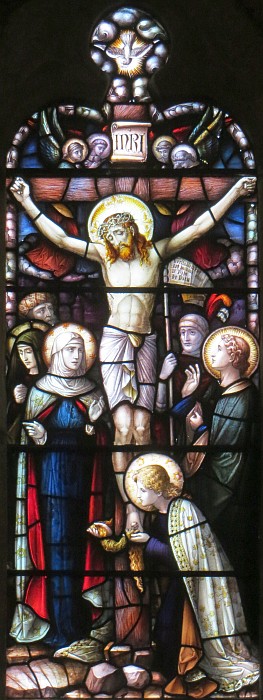
Aniet ch'est l'Vendrédi Saint. Né v'chîn les vèrsets 38-42 du dgiêx-neuvième chapitre d'la Bouonne Nouvelle s'lon Jean:

Today is Good Friday. Here's John, chapter 19, vv 38-42:
À r'tou d'chenna, Jôseph d'Arimathée, tchi 'tait un siêtheux d'Jésû (mais tchi l'siêthait en s'gret, ayant peux des Juis) d'mandit à Pilate dé lî laîssi emporter l'corps d'Jésû, et Pilate à l'accorder. Épis don i' s'en fut emporter l'corps. Et v'là tchi vînt Nicodème (lé chein tchi 'tait v'nu à Jésû la niet) auve un ballot d'un mêlange dé myrrh et d'aloé, tchi b'sait dans les septante livres. I' prîndrent lé corps dé Jésû, l'enfliubîdrent en lîn atout l's êpices, coumme i' font d'amors les Juis pouor l's entèrrements. Assa y'avait un gardîn pon bein liain d'l'endrait d'la cliouethie à la crouaix, et dans chu gardîn-là y'avait eune neuve tombe dans tchi fis d'âme n'avait 'té janmais êtrav'lé. Et don, viyant qué ch'tait l'jour d'la Graiethie pouor les Juis et qu'la tombe 'tait d'amain, ch'fut là qu'il' êtrav'lîdrent Jésû.

Thursday, 24 March 2016

Jeudi Saint - Maundy Thursday

There is some uncertainty over the origin of the term "Maundy".

Does it derive from Latin mandatum, or perhaps from an Anglo-Norman form of the word maund, woven basket?

We don't have a surviving form of this word in Jèrriais, but our mainland cousins preserve what seem to be forms of the word:

In mainland Norman, there’s a diton:

Givre à Noué
poumes à pllen maundelet


(frost at Christmas, apples by the basketful)

mâone is defined in the Dictionnaire Français-Normand (2013) as a round wicker two-handled basket carried on the back by fisherfolk for carrying fish; also a round basket in which lines are coiled ready for use. The Dictionnaire Normand Français (2012) gives further information and notes that attestations are from the Hague and Val de Saire areas of the Cotentin, and that nowadays mâones are more typically made of plastic or metal.

There’s also the quantity word mâonaée: a basketful of mackerel or other fish in a mâone.

Cherbourg writer Jean Tolvast (1870-1945) published a story “Maônet-Picot” – in which the character is being described as being so small he could fit into a mâone.

The loss of -d- wouldn’t be a surprising development.

Un but d'la Bibl'ye - Bible snippet

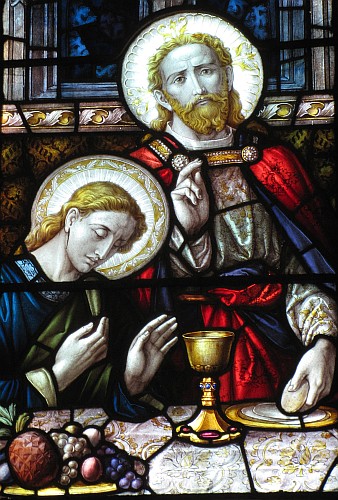
Aniet ch'est l'Jeudi Saint. Né v'chîn les vèrsets 52-58 du siêxième chapitre d'la Bouonne Nouvelle s'lon Jean:

Today is Maundy Thursday. Here's John, chapter 6, vv 52-58:
Épis les Juis lus êcanchîdrent à dêrenglyi en dithant, "Coumme tchi qué ch't houmme-chîn pouôrrait nos donner sa chai à mangi?"

Épis Jésû lus dit, "Véthe, j'vos l'dis, au mains qu'ou mang'gêtes d'la chai du Fis d'l'Houmme et qu'ou baiv'thêtes dé san sang, ou n'avez pon d'vie en vous. L'chein tchi mange dé ma chai et bait d'man sang a la vie êtèrnelle, et jé l'souôlèv'thai des morts au drein jour. Ch'est en tchi ma chai est l'vrai mangi et man sang est l'vrai baithe. L'chein tchi mange dé ma chai et bait d'man sang vit en mé et j'vis en li. Coumme man Péthe vivant m'a envyé et j'vis par cause du Péthe, êv'chîn l'chein tchi m'mange vivtha par cause dé mé. Chennechîn est l'pain tch'a d'valé du ciel. Vos péthes mangîdrent des mannes et i' mouothîdrent, mais chu mangi-chîn n'est pon d'même: lé chein tchi mange dé chu pain-chîn vivtha à tréjous."

Wednesday, 23 March 2016

baithe / béthe - to drink

baithe / béthe


Présent

j'bai
tu bai
i' bait
ou bait
j'baivons / j'bévons / jé b'vons
ou baivez / ou bévez / ou b'vez
i' baivent / i' bèvent

Prétérite

j'bus
tu bus
i' but
ou but
j'beûnmes
ou bûtes / ou bûdres
i' bûtent / i' bûdrent

Împarfait

j'baivais / j'bévais / jé b'vais
tu baivais / tu b'vais
i' baivait / i' b'vait
ou baivait / ou b'vait
j'baivions / jé b'vêmes
ou baiviez / ou b'vêtes
i' baivaient / i' b'vaient

Futur

j'baithai / jé b'thai
tu baithas / tu b'thas
i' baitha / i' b'tha
ou baitha / ou b'tha
j'baithons / jé b'thons
ou baithez / ou b'thez
i' baithont / i' b'thont

Conditionnel

j'baithais / jé b'thais
tu baithais / tu b'thais
i' baithait / i' b'thait
ou baithait / ou b'thait
j'baithons / jé b'thons / jé b'thêmes
ou baithez / ou b'thez / ou b'thêtes
i' baithaient / i' b'thaient

Présent Subjonctif

qué j'baive / qué j'bève
qué (qu') tu baive / qu'tu bève
qu'i' baive / qu'i' bève
qu'ou baive / qu'ou bève
qué j'baivions / qué j'bévthêmes / qué j'baivthêmes
qu'ou baiviez / qu'ou bévthêtes / qu'ou baivthêtes
qu'i' baivent / qu'i' bèvent

Împarfait subjonctif

qué j'bûsse
qué (qu') tu bûsse
qu'i' bûsse
qu'ou bûsse
qué j'bûssions
qu'ou bûssyiz / qu'ou bûssiez
qu'i' bûssent


Temps composés

Présent continnu
j'sis à baithe / béthe, etc.
Pâssé continnu
j'tais à baithe / béthe, etc.
Futur continnu
jé s'sai à baithe / béthe, etc.
Parfait
j'ai bu, etc.
Pus-qu'parfait
j'avais bu, etc.
Futur Parfait
j'éthai bu, etc.
Conditionnel Parfait
j'éthais bu, etc.
Parfait continnu
j'ai 'té à baithe / béthe, etc.
Pus-qu'parfait continnu
j'avais 'té à baithe / béthe, etc.
Futur Parfait continnu
j'éthai 'té à baithe / béthe, etc.
Conditionnel Parfait continnu
j'éthais 'té à baithe / béthe, etc.

Participes

Présent
baivant / bévant / b'vant
Pâssé
bu

Împératif

bai, baivons / bévons / b'vons, baivez / bévez / b'vez

Un but d'la Bibl'ye - Bible snippet

Duccio di Buoninsegna - Pact of Judas - WGA06789Aniet ch'est l'Mêcrédi Saint. Né v'chîn les vèrsets 67-71 du siêxième chapitre d'la Bouonne Nouvelle s'lon Jean:

Today is Holy Wednesday. Here's John, chapter 6, vv 67-71:

Jésû dit à la douzaine, "Voul'-ous vos'n'aller étout?"

Épis Simon l'Rotchi lî rêponnit, "Seigneu, iou qu'j'éthêmes à aller? Ch'est té tch'as les patholes d'la vie êtèrnelle; et j'nos fions en té et j'soummes asseûthés qué tu'es l'Onguenné du Bouôn Dgieu."

Épis Jésû dit, "Jé n'vos ai-t-i' pon chouaîsi, ma douzaine, et n'en v'là-t-i' iun d'entré vous tch'est un fis du Malîn?" (I' pâlait d'Jûda fis Simon l'Kériotchien; ch'tait li, ouaithe qu'i' fûsse iun d'la douzaine, tchi 'tait pouor trisonner Jésû).

Tuesday, 22 March 2016

Du Jèrriais à l'aubèrge - Pub Jèrriais

Un but d'la Bibl'ye - Bible snippet

Aniet ch'est l'Mardi Saint. Né v'chîn les vèrsets 1-5 du seizième chapitre d'la Bouonne Nouvelle s'lon Jean:

Today is Holy Tuesday. Here's John, chapter 16, vv 1-5:
"J'vos ai dit tout chennechîn à seule fîn qu'vot' fouai n'sait pon ravaûlée. Nou s'en va vos fliantchi hors des Salles d'Assembliées: véthe, v'là tchi veint l'temps qu'un châtchun tchi vos tueûtha craitha qu'il est à faithe lé travas du Bouôn Dgieu. Et nou f'tha d'même par cause qué nou n'a connu ni l'Péthe ni mé. J'vos ai dit tout chennechîn à seule fîn qué quand veindra chu temps-là, chein qué j'vos ai dit vos veindra à l'esprit. Jé n'vos ai pon dit chennechîn au c'menchement viyant qué j'tais acanté vous. Achteu j'sis pouor aller hors siez l'chein tchi m'a envyé, et n'y' pon d'entré vous tchi m'a d'mandé, 'Iou qu'tu vais don?'"

World Poetry Day

D'la poésie dans la Bibliothèque dé Jèrri chutte sémaine pouor la Journée Mondiale d'la Poésie.Poetry in the Jersey...

Posted by L'Office Du Jèrriais on Monday, 21 March 2016

Monday, 21 March 2016

Anglo-Norman words: WoM: 'Easter' or 'Pasche'

Anglo-Norman words: WoM: 'Easter' or 'Pasche': Before the AND starts its well-deserved Easter break, let’s have a look at the word - Easter - in its medieval context of multilingual Engl...

La Lettre Jèrriaise

La Lettre Jèrriaise auve Alan Poignand sus BBC Radio Jèrri.

Shakespeare en Jèrriais

Un mio d'Shakespeare en Jèrriais sus BBC Radio Jèrri à matîn (entre 1h:22mins - 1h:27mins): coumme tchi traduithe les sonnets?

Jèrriais Shakespeare on BBC Radio Jersey this morning (from 1h:22mins to 1h:27mins): how can one translate the sonnets?